
Legacy Business System Modernization
What is Legacy business System?
A legacy business system or broadly old outdated information technology infrastructure applications and business processes typically implemented as a single piece legacy systems generally run on software and hardware that is customer-owned hosted managed and supported and over the period of time it becomes a costly affair most of the times these systems are functional even today but they may create a financial burden to the organization as the cost of maintenance goes up and impacts the business performance
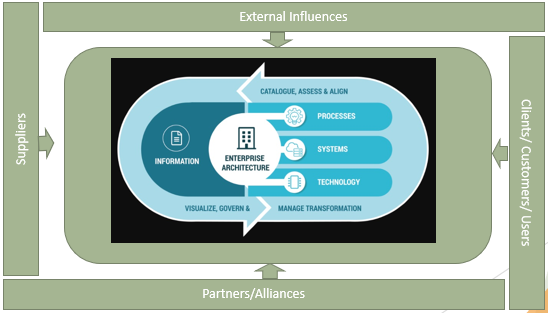
Broader Picture - Enterprise Architecture
Enterprise architecture for the organization is the process by which organizations standardize and organize IT infrastructure to aligns with business goals. The legacy system is part of the EA. There are multiple strategies that support digital transformation, IT growth, and the modernization of IT as a department.
The architect’s job is to look at the bigger picture and understand and provide gentle guidance
Modernisation Driving Factors -Business Performance Indicators
Below listed are applicable areas – The list is self-explanatory and can be extended as required. The architect should consider these as pointers for driving factors for change in architecture within the organization.
1. Technology and Architecture
1.1 Architecture - Software architecture, Data architecture, Information architecture, etc.
1.2 Infrastructure - On-Prem/Cloud, IaaS, PaaS, SaaS , Hybrid etc
1.3 Testing - Test Automation, Manual Test, Test-Driven Development
1.4 Tooling - Collaboration Tools, Development Tools, Dev-Ops Tools, Planning Tools, Static Code Analysis, etc.
1.5 Security and Compliance
2. Working Practices
2.1 Engineering Practices - Tech Debt Management, Policies, and Principals, Coding Guidelines, Quality Center, Code Reviews and Policies, etc.
2.2 CICD and Practices
2.3 Project Management - Agile Project management, Definition of Done, Ceremonies
3. Organization Enablement
Portfolio Management, Talent Management, Capability Building, Performance, Career Path, Employee Value Proposition, Culture, Collaboration, and Knowledge Share Team Characteristic, Agility, etc.
Legacy Modernisation Strategies
Information Technology is used to modernize. Here I would be explaining 2 simple concepts- Digital Transformation and Digital Migration.
Digital Transformation, basic business processes are completely changed. This is achieved by taking advantage of the latest innovative technologies in the market. This may result in new business models, new revenue streams, policies, and values for the organization.
Digital modernization certain business processes are changed for increasing efficiency. (Operation/Cost/Performance etc.) as mentioned above in driving factors. This is a Process, a process of changing business processes and bringing an organization “up to speed” with the latest technology.
These two strategies require architects to look at the organization through a wide eye lens and shake up the business model to fundamentally change business performance.
What are Digital Transformation Options ?
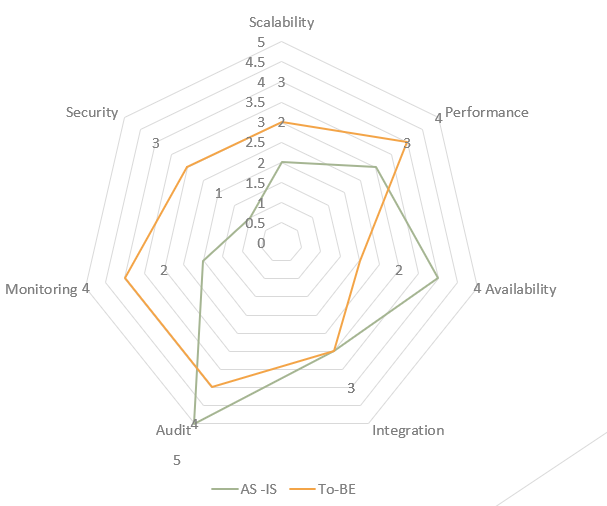
Digital transformation nowadays has become a high priority on agenda, many organizations are making strategic contributions to their overall business. Digital transformation is complex and that affects many segments within the organization. We as managers or architects need to balance the exploration and exploitation of technology to achieve the goal. Lack of clarity and exploration of existing solutions may invite a lot of risks. There are many frameworks available, but preparing "as-is" architecture and "to-be" architecture from a technology perspective covering overview, scope and goals make an easier journey. Sometimes preparing Radar Chart highlighting goals can be a visual option to define the goal.
What are Modernization Options ?
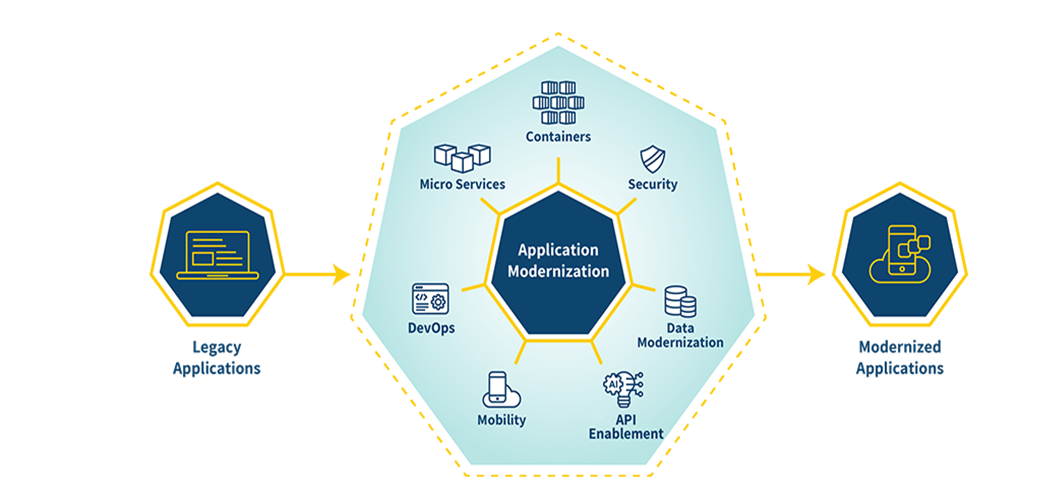
Below are options and their definitions. Very easy to understand. It's all about choosing between rearchitecting, rebuilding, or replacing. Rearchitecting has medium costs and risks, as compared to rebuilding or replacing. It provides the best results with higher costs and risks. The important point is to consider the short-term benefit and long-term cost – technical debt.
Encapsulate. Leverage and extend the application features by encapsulating its data and functions, making them available as services via an API.
Rehost- (Lift and Shift). Redeploy the application component to other infrastructure (physical, virtual, or cloud) without modifying its code, features, or functions.
Re-Platform. Migrate to a new runtime platform, making minimal changes to the code, but not the code structure, features, or functions.
Refactor. Restructure and optimize the existing code (although not its external behavior) to remove technical debt and improve nonfunctional attributes.
Re-Architect. Materially alter the code to shift it to new application architecture and exploit new and better capabilities.
Rebuild. Redesign or rewrite the application component from scratch while preserving its scope and specifications.
Replace. Eliminate the former application component altogether and replace it, considering new requirements and needs at the same time.
Guidelines for Digital Modernization Approach
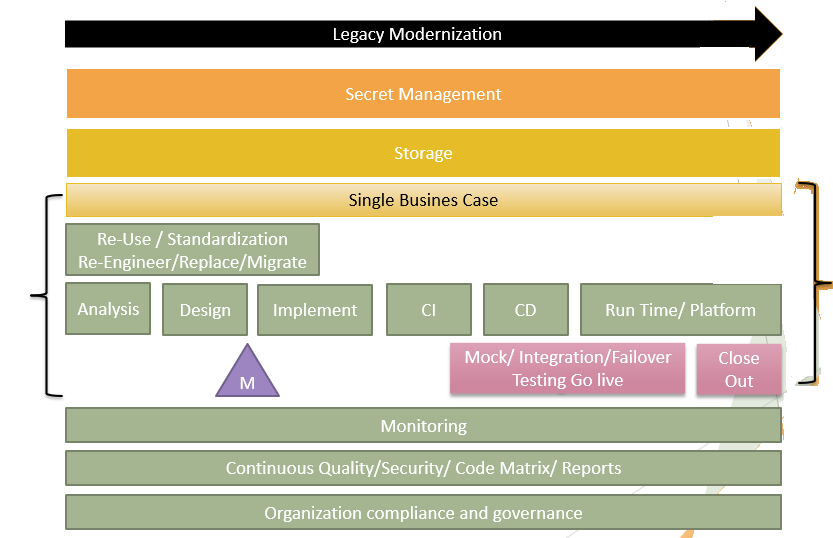
Below are the pointers for deciding the approach, not all steps required, but you may choose as required.
- Prepare organizational Goals and form a mission vision statement
- Choose and prioritize business systems to be modernized – Perform Due Diligence & Using Tools and available Frameworks
- Perform Assessment
Below are the steps to perform an assessment.
3.1 Understand the Business System(s)
3.2 Document Business-Data-Application-Technology- Architecture of the system
3.3 Document the business process(s) and business system(s) and Integration points (Ports and adaptors)
3.4 Document Pain points, Improvement Areas, Performance Bottlenecks Consider constraints
Document modernization goals and objectives. Most of the time every system will have its own objective. Some systems need performance tweaks, some might have scalability issues. Etc. Defining the problem statement is key to start
Rewrite the Specifications Consider writing 5.1 Technical Requirements 5.2 User Requirements 5.3 Operational Requirements 5.4 Others Like Regulatory …
Evaluate Modernization Options 6.1 Perform Solutioning 6.2 Build VS Buy/Rent 6.3 Cloud agnostic vs Native 6.4 Decision Matrix/Cost-Benefit/SWOT /Pareto Analysis – etc.
Build Plan – This is the phase that helps to imagine the deliverables, and run their futures with cloud technologies. 7.1 Evaluate Micro-Services Options 7.2 Prototype solution 7.3 Perform Cost Estimations
Deliver the solution
Concluding Comments
Digital transformation is a complex, organization-wide effort. I hope I have described guidelines for A systematic approach to help you to formulate a digital transformation strategy.
Its first steps toward rearchitecting to help managers and architectures to address the challenge more systematically, I have extended previous work on digital transformation strategy through the lessons learned. I hope you enjoyed the article. Feel free to share.